Understanding the Perks and Innovations in the Aluminum Foundry Industry
The Aluminum Foundry market plays an important function in modern production. Its light-weight residential properties especially improve fuel effectiveness, particularly in aerospace and auto markets. On top of that, Aluminum's resistance to deterioration guarantees longevity in different applications. As the industry develops, technologies such as advanced recycling and additive manufacturing are reshaping manufacturing approaches. Discovering these advancements exposes not only the advantages but likewise the difficulties in advance for Aluminum factories in a rapidly changing market.
The Lightweight Benefit of Aluminum
Aluminum's lightweight nature offers considerable advantages throughout numerous sectors, particularly in production and transport. Its low density enables the manufacturing of parts that are easier to take care of and mount, resulting in reduced labor costs and improved performance. In the automobile industry, lighter cars add to enhanced fuel economy and lower emissions, lining up with global sustainability objectives. In aerospace, the use of Aluminum reduces the overall weight of aircraft, which is vital for improving performance and lowering operational prices.
Furthermore, Aluminum's light-weight homes facilitate ingenious designs that were previously unfeasible with heavier products. This versatility enables manufacturers to create complicated shapes and frameworks while preserving architectural stability. In general, the lightweight benefit of Aluminum not only boosts product efficiency however also drives developments in modern technology and layout, making it a favored product in different applications.
Corrosion Resistance and Sturdiness
The Aluminum Foundry industry is renowned for creating products with exceptional rust resistance, making them optimal for various applications. This property, incorporated with boosted structural honesty, adds to the durable efficiency benefits that Aluminum parts offer. Therefore, markets progressively count on Aluminum to satisfy requiring ecological conditions without compromising top quality.
Superior Corrosion Resistance
While various metals deal with significant obstacles from ecological aspects, Aluminum attracts attention for its superior deterioration resistance, making it a preferred choice in lots of applications. This residential property is primarily due to a natural oxide layer that bases on the Aluminum surface area, supplying an obstacle against moisture and corrosive representatives. Unlike other metals that might corrosion or weaken with time, Aluminum preserves its integrity even in extreme environments, such as seaside areas or commercial setups. In addition, its light-weight nature combined with deterioration resistance makes it perfect for applications in aerospace, automotive, and aquatic markets. Overall, Aluminum's phenomenal sturdiness not just improves item durability yet likewise lowers maintenance prices, presenting an engaging advantage for manufacturers and consumers alike.
Boosted Architectural Integrity
Designers and designers significantly acknowledge the significance of improved architectural honesty in modern-day applications, where both deterioration resistance and toughness are essential. Aluminum alloys, understood for their lightweight residential or commercial properties, also exhibit outstanding resistance to deterioration, making them appropriate for severe settings. The cutting-edge strategies employed in the Aluminum Foundry industry contribute considerably to generating parts with enhanced resilience. Advanced casting procedures and alloy structures are tailored to fulfill specific performance needs, making sure that frameworks can stand up to severe problems without compromising integrity. Surface therapies and layers improve the life-span of Aluminum products, better mitigating degeneration over time. This concentrate on boosted architectural integrity not only extends the usability of products but likewise minimizes upkeep prices, solidifying Aluminum's setting as a product of option in various markets.
Durable Performance Perks
Lasting efficiency in Aluminum components is greatly connected to their premium deterioration resistance and resilience. Unlike numerous steels, Aluminum normally develops a protective oxide layer, which avoids rust and degeneration in numerous atmospheres, consisting of commercial and aquatic setups. This inherent residential or commercial property significantly prolongs the life-span of Aluminum products, reducing maintenance and substitute expenses. Furthermore, the lightweight nature of Aluminum improves its applicability throughout sectors without endangering strength. The material's resistance to use and tear also adds to its reliability in demanding applications, making it a suitable choice for auto, aerospace, and construction markets. As markets progressively prioritize sustainability and long life, Aluminum's efficiency benefits line up with contemporary design requirements, strengthening its function in ingenious manufacturing processes.
Ecological Impact and Sustainability
 As the Aluminum Foundry market progresses, it progressively prioritizes environmental effect and sustainability, recognizing the requirement for liable practices when faced with climate change. Efforts to minimize waste and energy usage go to the leading edge, with many foundries adopting reusing efforts to redeem Aluminum scrap. This not only lowers basic material use however likewise significantly reduces down energy expenditure, as recycled Aluminum needs just a fraction of the power contrasted to key manufacturing.
Advancements in discharges manage innovations are being carried out to reduce air pollutants, lining up operations with stricter environmental laws. Shops are also discovering alternate power sources, such as solar and wind, to power their facilities sustainably. By promoting collaboration with stakeholders, the market intends to establish innovative remedies that enhance eco-friendly stewardship. Jointly, these efforts highlight a dedication to decreasing the Aluminum Foundry's carbon footprint while advertising a round economic climate within the production sector.
Advanced Manufacturing Techniques
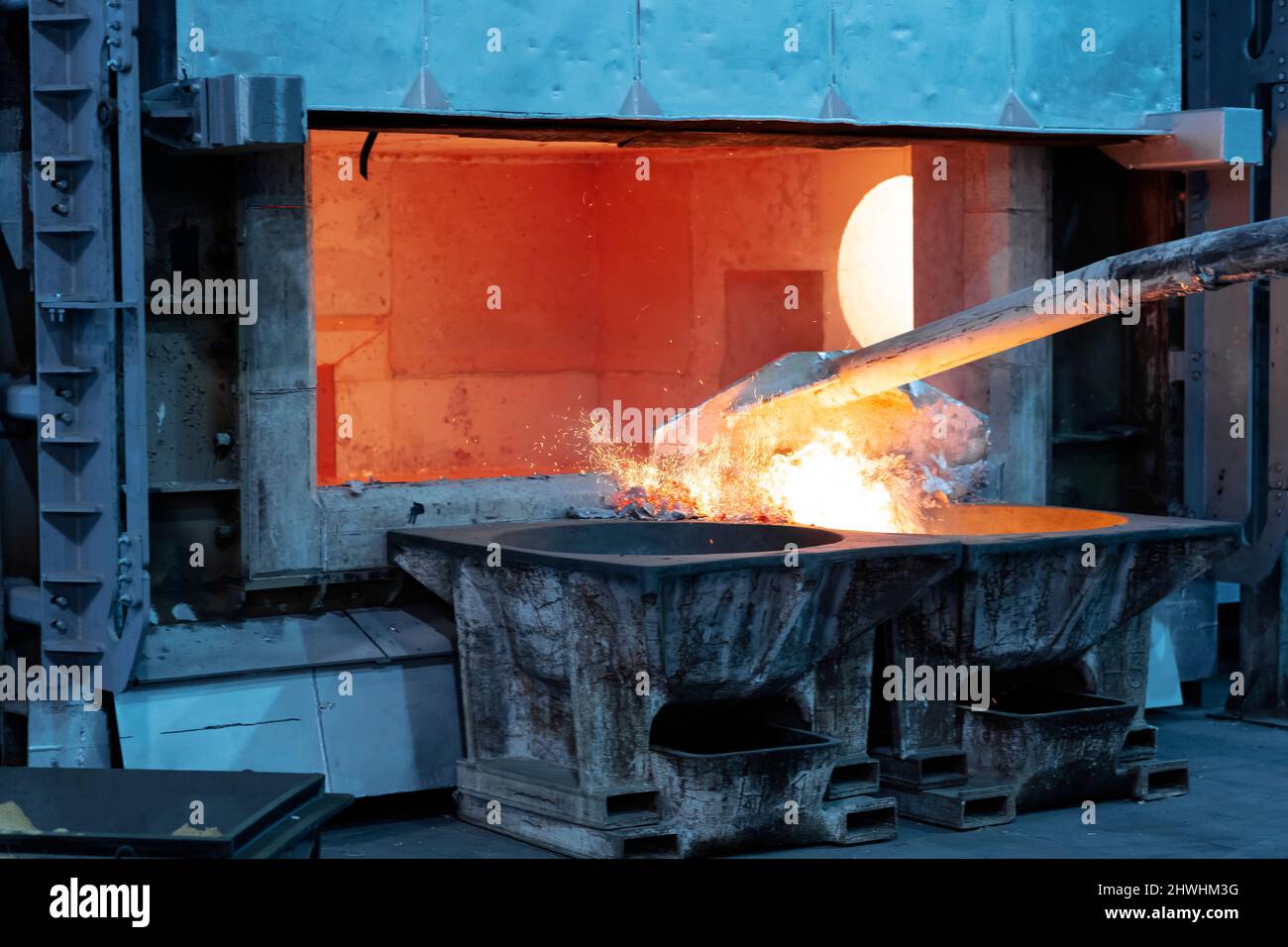 Transforming manufacturing processes, the Aluminum Foundry market is significantly integrating innovative manufacturing techniques to improve performance and precision. Methods such as computer mathematical control (CNC) machining and additive production have emerged as vital components in optimizing manufacturing operations. CNC machining enables high-precision element fabrication, considerably decreasing product waste and production time. Additive manufacturing opens brand-new avenues for complicated geometries and lightweight layouts that were previously difficult to accomplish.
In addition, the release of automation and robotics in Aluminum factories improves operations, minimizes human error, and boosts employee safety and security. These technologies promote an even more responsive manufacturing environment, making it possible for producers to adapt rapidly to market demands. The integration of sophisticated simulation software program further boosts the style and screening stages, resulting in superior item high quality. Jointly, these strategies not only improve operational performance however likewise foster technology, positioning the Aluminum Foundry sector at the center of modern production.
Advancements in Recycling Processes
The Aluminum Foundry sector is not just advancing in manufacturing methods however is also making substantial strides in reusing processes. Technologies are emerging to improve the effectiveness of recycling approaches, minimizing power intake and improving sustainability. Advanced arranging technologies, such as automatic optical sorting, enable the recognition and separation of Aluminum from other products with high precision. This results in a better of recycled Aluminum, which is important for preserving the honesty of the last products.
Closed-loop recycling systems are being executed, permitting makers to recycle Aluminum scrap within their very own production procedures. This reduces waste and advertises a round economy. Additionally, study right into new recycling strategies, such as hydrometallurgical processes, uses the capacity for recouping Aluminum from complicated waste streams. These advancements not only add to lowering the carbon footprint of the Aluminum Foundry sector however additionally reinforce its economic feasibility in a progressively eco mindful market.
Applications Throughout Various Industries
Various markets find out are progressively acknowledging the convenience and advantages of Aluminum Foundry products, resulting in prevalent applications throughout fields such as vehicle, customer, building, and aerospace products. In the auto industry, Aluminum spreadings contribute to lightweight car styles, boosting gas effectiveness and efficiency. Aerospace suppliers use Aluminum components for their strength-to-weight ratio, essential for aircraft structures and parts.
In building and construction, Aluminum is favored for its longevity and check my site resistance to deterioration, making it excellent for home window frameworks, roofing, and structural assistances. Durable goods also take advantage of Aluminum Foundry items, as seen in cookware, electronic devices, and packaging, where light-weight and recyclable products are important.
The adaptability of Aluminum Foundry methods permits intricate styles and exact requirements, catering to the diverse needs of these sectors. Because of this, Aluminum Foundry products are becoming important to contemporary production procedures across numerous fields.
Future Trends in Aluminum Foundries
As markets proceed to advance, Aluminum foundries are positioned to welcome a number of key patterns that promise to enhance effectiveness and sustainability. One famous fad is the enhancing adoption of electronic innovations, consisting of automation and expert system, which simplify operations and improve quality assurance. In enhancement, the push towards lasting practices is leading factories to invest in reusing modern technologies, significantly lowering waste and energy usage.
 One more arising fad is using advanced alloys and products, satisfying the expanding need for lightweight and long lasting elements throughout various industries (Aluminum Foundry). Moreover, the assimilation of additive manufacturing methods is expected to revolutionize component style, offering modification and decreasing lead times
Cooperation with study establishments is also anticipated to drive technology, as factories seek to develop new procedures and materials. Aluminum Foundry. Collectively, these trends indicate a transformative future for the Aluminum Foundry market, aligning with wider objectives of sustainability and effectiveness
Frequently Asked Concerns
What Are the Typical Costs Connected With Aluminum Foundry Manufacturing?
The regular expenses linked with Aluminum Foundry manufacturing consist of basic materials, labor, power, tools maintenance, and overhead costs. These factors collectively influence the total financial investment needed for reliable Aluminum spreading operations.
Just How Does Aluminum Compare to Various Other Steels in Stamina?
Aluminum, while lighter than several metals, displays excellent strength-to-weight proportions. Compared to steel, Aluminum is less solid but supplies superb deterioration resistance, making it a desirable option in applications where weight and longevity are vital.
What Precaution Are in Place in Aluminum Foundries?
Precaution in Aluminum foundries generally include mandatory individual protective equipment, ventilation systems to control fumes, routine devices upkeep, training programs for employees, and adherence to rigorous safety guidelines to reduce threats related to liquified steel handling.
Exactly How Is Quality Assurance Managed in Aluminum Spreading Processes?
Quality control in Aluminum spreading processes involves extensive assessments at different phases, including raw product examination, process tracking, and end product screening. Methods such as analytical procedure control and non-destructive testing assurance adherence to market criteria.
What Certifications Are Essential for Aluminum Foundry Vendors?
The relevance of certifications for Aluminum Foundry vendors consists of ISO 9001 for top quality monitoring, ISO 14001 for environmental management, and industry-specific criteria like ASTM and SAE, making certain conformity, safety and security, and integrity in making processes.
The Aluminum Foundry market plays an important role in modern production. The Aluminum Foundry market is renowned for generating materials with superior corrosion resistance, making them suitable for different applications. Reinventing manufacturing procedures, the why not try here Aluminum Foundry industry is increasingly integrating advanced production techniques to boost effectiveness and precision. The Aluminum Foundry sector is not only progressing in producing methods however is additionally making significant strides in reusing procedures. As markets continue to develop, Aluminum foundries are poised to accept a number of crucial trends that assure to improve efficiency and sustainability.